Fuel bowsers are mobile fuel tanks designed to store, transport, and dispense fuel efficiently across sites where fixed refuelling infrastructure is impractical or unavailable. Commonly used in construction, agriculture, logistics, and events, they play a critical role in maintaining operational continuity and reducing downtime.
This article explores the origin of the term “fuel bowser,” their core applications, regulatory requirements, and why they remain a strategic asset for businesses operating in fuel-dependent environments.
The Role and Configuration of Fuel Bowsers
A fuel bowser is a portable fuel storage unit – typically mounted on a trailer or skid base – engineered to deliver fuel directly to machinery, vehicles, or generators. These units are built for mobility, safety, and compliance, and often include:
- Bunded tanks (double-skinned) to prevent environmental contamination
- Integrated pumps (manual or electric) for controlled dispensing
- Lockable compartments for hose and nozzle storage
- Venting systems to manage pressure and prevent vapor buildup
- Towable chassis for road or site transport, depending on classification
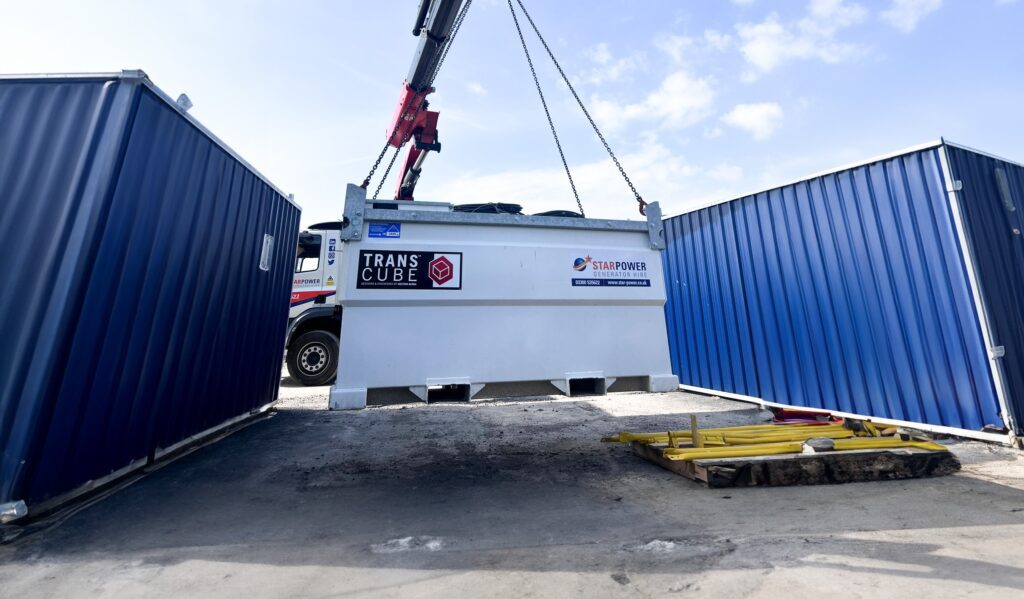
Fuel bowsers are available in various capacities, ranging from compact 200-litre cubes to 2,000-litre road-tow units, depending on operational needs and regulatory constraints.
Why Is It Called a Fuel Bowser?
The term “bowser” traces back to Sylvanus Bowser, an American inventor who developed the first fuel pump in 1885.
His name became synonymous with fuel dispensing equipment, particularly in Commonwealth countries. Over time, “fuel bowser” came to refer specifically to mobile fuel tanks used for on-site refuelling.
What Are Fuel Bowsers Used For?
Fuel bowsers are deployed across a wide range of industries where access to fuel is mission-critical. Key applications include:
- Construction and Infrastructure
- Refuelling excavators, dumpers, generators, and site vehicles
- Supporting remote or temporary worksites without fixed fuel stations
- Reducing idle time and improving project efficiency
- Agriculture and Farming
- Powering tractors, harvesters, irrigation pumps, and backup generators
- Enabling seasonal operations in remote fields
- Supporting multi-farm logistics with mobile fuel access
- Mining and Quarrying
- Delivering fuel to heavy-duty equipment in off-grid environments
- Ensuring uninterrupted operations in high-consumption zones
- Events and Temporary Installations
- Supplying fuel for lighting rigs, sound systems, and mobile kitchens
- Supporting outdoor festivals, film sets, and emergency response setups
- Transport and Logistics
- Refuelling fleet vehicles at depots or en route
- Facilitating fuel distribution in rural or underserved regions
In each case, fuel bowsers offer a cost-effective, scalable solution for maintaining uptime and reducing reliance on third-party refuelling services.
Regulatory Requirements for Fuel Bowsers
Fuel bowsers are subject to stringent regulations to ensure safe handling, environmental protection, and legal compliance. Key considerations include:
Tank Construction and Bunding
- Must be 110% bunded (double-skinned) to contain spills and leaks
- Tanks must be constructed from approved materials such as steel or polyethylene
Transport and Road Use
- Road-tow bowsers must be fully road legal, with lights, brakes, and reflectors
- Site-tow bowsers are restricted to off-road use only
- Maximum capacity for non-ADR transport is typically 1,000 litres
Safety Equipment
- Vehicles towing fuel bowsers must carry a fire extinguisher
- Spill kits and PPE are recommended for operators handling fuel
ADR Compliance
- For transporting hazardous substances over 1,000 litres, ADR (Accord Dangerous Goods by Road) certification is required
- Operators must be trained in handling flammable liquids and emergency procedures
Inspection and Maintenance
- Regular inspections are required to ensure tank integrity and pump functionality
- Documentation of fuel movements may be necessary for audit and environmental reporting
Failure to comply with these regulations can result in fines, environmental damage, and operational delays, which makes it essential for businesses to source compliant equipment and train staff accordingly.
Types of Fuel Bowsers Available
There are a number of fuel bowser options. Take a look at the table below:
| Type | Description | Typical Use Case |
| Site Tow Bowsers | Off-road use only; rugged chassis | Construction, agriculture |
| Road Tow Bowsers | Fully road legal; includes lighting/braking | Events, logistics, multi-site ops |
| Skid Base Tanks | Stationary use; forklift-compatible | Generator support, depot storage |
| Fuel Cubes / Caddies | Compact, portable units | Small machinery, mobile teams |
Fuel Bowsers from Star Power
At Star Power, we supply high-performance fuel bowsers tailored to the demands of modern B2B operations. Our units are fully compliant, bunded, and built for durability, whether you’re managing a construction fleet, powering agricultural equipment, or supporting event logistics.
We offer bowser hire services that include:
- Road-tow, static fuel and fuel cube options in multiple capacities
- Custom configurations for pump type, hose length, and tank material
- Expert guidance on regulatory compliance and operational best practices
With a proven track record in supporting multi-sector fuel logistics, Star Power is your trusted partner for mobile refuelling solutions.

Our content reflects our commitment to reliability, safety, and practical knowledge - highlighting projects, service developments, and industry guidance designed to support your power needs.
- Star Power Supports British Antarctic Survey During Planned Power Shutdown - October 13, 2026
- Star Power Achieves CHAS Reaccreditation for 2026/27 - July 1, 2026
- Star Power Strengthens Commitment to Safety with Renewed Safehire Accreditation - June 10, 2026
